


There are many ways to depanel PCBs, and each method works best in different situations. Choosing the right one can boost production efficiency and help cut down costs. In this article, we’ve rounded up some common questions about PCB depaneling methods—let’s explore them together!
- Part 1. What are the common methods of PCB depaneling?
- Part 2. How does V-cut depaneling work in PCB manufacturing?
- Part 3. What is router depaneling and when is it used?
- Part 4. How does laser depaneling compare to mechanical methods?
- Part 5. What are the advantages of using laser depaneling for PCBs?
- Part 6. What are the disadvantages of V-score depaneling?
- Part 7. Which depaneling method causes the least stress on PCBs?
- Part 8. What is tab-routing in PCB depaneling?
- Part 9. How do you choose the best PCB depaneling method?
- Part 10. Is laser depaneling suitable for all PCB types?
- Part 11. FAQs about PCB Depaneling Methods
Part 1. What are the common methods of PCB depaneling?
The main PCB depaneling methods include V-cut (V-score), router (milling), punching (die-cut), laser, cutting, and manual breakaway. Each method has different advantages depending on board design, material, production volume, and required precision.
Part 2. How does V-cut depaneling work in PCB manufacturing?
V-cut depaneling involves scoring the PCB panel with V-shaped grooves along the separation lines. After assembly, the panel is snapped apart manually or with a machine, making it fast and cost-effective for straight, simple layouts.
Part 3. What is router depaneling and when is it used?
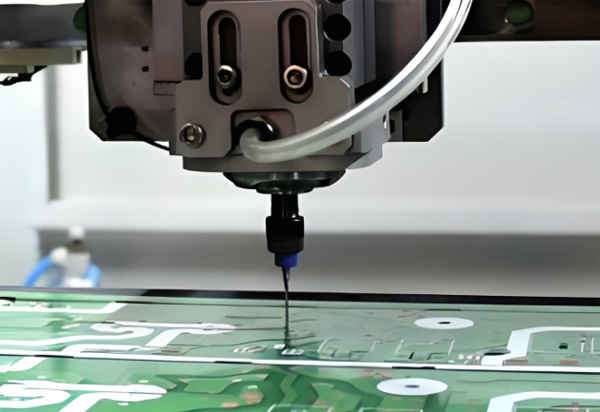
Router depaneling uses a high-speed rotating bit to mill the outline of each PCB. It’s ideal for complex shapes and minimizes mechanical stress. It’s widely used in automated, high-volume production lines requiring precise edge quality.
Part 4. How does laser depaneling compare to mechanical methods?
Laser depaneling uses a focused laser beam to cut PCBs without physical contact. It provides high precision, clean edges, and minimal stress. Unlike mechanical methods, it avoids tool wear and is suitable for delicate or flexible PCBs.

Part 5. What are the advantages of using laser depaneling for PCBs?
Laser depaneling offers precise, non-contact cutting, ideal for fine-pitch components and sensitive materials. It produces minimal mechanical stress, allows complex shapes, and generates no dust, making it suitable for cleanroom use.
Part 6. What are the disadvantages of V-score depaneling?
V-score depaneling is limited to straight-line cuts and can stress components near the groove. It also creates rougher edges compared to routing or laser. It’s not suitable for flexible, curved, or high-density designs.
Part 7. Which depaneling method causes the least stress on PCBs?
Laser depaneling causes the least mechanical stress because it is a non-contact method. It is ideal for fragile components, thin boards, and tight component layouts that could be damaged by mechanical separation.
Part 8. What is tab-routing in PCB depaneling?
Tab-routing is a method where small tabs with perforations are left between the PCB and the panel. A router removes most of the board outline, and the tabs are later broken or punched out. It allows for clean separation and curved edges.
Part 9. How do you choose the best PCB depaneling method?
Choosing the best method depends on the PCB shape, component layout, material, production volume, and cost requirements. For example, V-cut is economical for straight lines, while laser is best for precision and sensitive designs.
Part 10. Is laser depaneling suitable for all PCB types?
Laser depaneling works with many PCB types, including rigid, flexible, and rigid-flex boards. However, it may be less effective or slower on thick metal-core boards unless specialized lasers are used. Proper ventilation is also required.
Part 11. FAQs about PCB Depaneling Methods
What types of PCBs are best for router depaneling?
Router depaneling works best for rigid or rigid-flex PCBs with irregular shapes or curved edges, especially where V-cuts aren’t suitable.
Can depaneling methods affect PCB quality or performance?
Yes. Poor depaneling can cause edge damage, stress cracks, or signal issues. The right method minimizes mechanical or thermal stress.
What is punching depaneling and what are its limitations?
Punching uses a custom die to quickly separate PCBs. It’s fast but only suits simple shapes and high volumes due to high tooling cost.
How accurate is router depaneling compared to laser cutting?
Router depaneling is precise but less accurate than laser. Laser offers higher precision and cleaner edges, especially for tight layouts.
Can you combine V-cut and router depaneling on one panel?
Yes. Many designs use V-cuts for straight lines and routing for curves or sensitive areas to balance cost and flexibility.
What are the safety considerations in router depaneling?
Dust control, bit sharpness, secure fixturing, and operator training are key to prevent injury and maintain machine performance.
How much clearance is needed for V-cut depaneling?
Typically, components should be at least 1 mm away from the V-groove to avoid stress damage during panel separation.
What is the heat effect in laser depaneling?
Laser cutting generates localized heat, which may cause slight edge charring or thermal stress if not properly controlled.
How does PCB thickness affect the choice of depaneling method?
Thicker boards are harder to break or cut cleanly. Routing or punching works better for thick PCBs; laser may be slower.
Which depaneling method is best for high-volume PCB production?
Punching is ideal for high-volume production due to its speed, but router or V-cut methods also scale well with automation.

A professional with over a decade of experience in the PCB depaneling industry.
 Spanish
  English