


When I started soldering PCBs, I had tons of basic questions—about tools, temperature, and how not to mess things up. I’ve gathered some beginner questions here, along with clear answers I wish I had back then. Hope they make your learning smoother.
- Part 1. How to solder a PCB by hand?
- Part 2. What tools do I need to solder a PCB?
- Part 3. How to solder surface mount components on a PCB?
- Part 4. How to solder through-hole components to a PCB?
- Part 5. What temperature should I solder PCB components at?
- Part 6. How to tin soldering iron tip for PCB work?
- Part 7. What solder type is best for PCB soldering?
- Part 8. How to avoid solder bridges on a PCB?
- Part 9. How to rework SMD solder joints on a PCB?
- Part 10. How to clean solder flux after soldering PCB?
- Part 11. FAQS about PCB Soldering
Part 1. How to solder a PCB by hand?
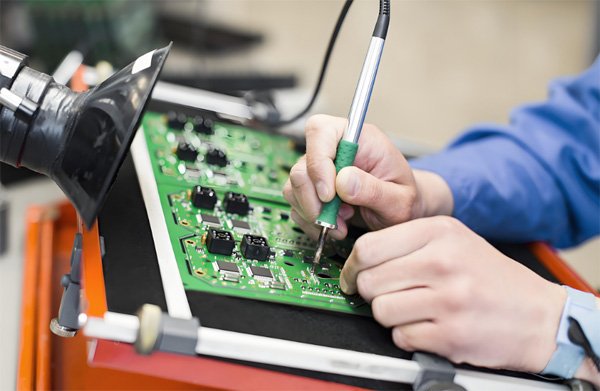
To solder a PCB by hand, place the components into the board, then heat the metal pad and component lead with a soldering iron. Once heated, touch solder to the joint (not the iron) and let it melt. Remove the solder and iron, and let the joint cool naturally.
Part 2. What tools do I need to solder a PCB?
You’ll need a soldering iron, solder wire (preferably with flux), tweezers, wire cutters, a soldering stand, and optional tools like flux pen, desoldering pump, and magnifying glass. A helping hand tool or PCB holder is also helpful for stability.
Part 3. How to solder surface mount components on a PCB?
Use tweezers to position the SMD part. Apply a small amount of solder to one pad first. Hold the part with tweezers and reheat the pad to attach one leg. Then solder the remaining pads. You can also use solder paste and a hot air rework station or reflow oven.
Part 4. How to solder through-hole components to a PCB?
Insert the component leads through the holes. Flip the board, touch the iron to the pad and lead, and feed in solder. Remove the solder and iron. The solder should form a cone shape. Clip off extra lead length after the joint cools.
Part 5. What temperature should I solder PCB components at?
For most leaded solder (60/40 or 63/37), set your iron to 315–350°C (600–660°F). For lead-free solder, 350–400°C (660–750°F) may be needed. Too low won’t melt solder; too high risks damaging components or pads. Use the lowest effective temperature.
Part 6. How to tin soldering iron tip for PCB work?
Turn on the iron and let it heat up. Then apply a small amount of solder to the tip so it’s coated with a shiny layer. This protects the tip and helps heat transfer. Wipe the tip on a damp sponge or brass wool to remove excess or old solder.
Part 7. What solder type is best for PCB soldering?
For beginners, leaded solder (60/40 or 63/37 with rosin-core flux) is easiest to work with. It melts at lower temperatures and flows better. Lead-free solder is more eco-friendly but harder to work with. Use 0.5–0.8 mm solder for fine electronics.
Part 8. How to avoid solder bridges on a PCB?
Use the right amount of solder and a fine-tipped iron. Avoid applying too much heat or solder between pins. For SMDs, drag soldering should be done carefully. Flux helps control solder flow. If bridges happen, use solder wick to remove them.
Part 9. How to rework SMD solder joints on a PCB?
Apply flux to the area, then reheat the joint with a soldering iron or hot air tool. Add a small amount of fresh solder if needed. Use tweezers to reposition the component. You can also use solder wick to remove excess solder before redoing the joint.
Part 10. How to clean solder flux after soldering PCB?
Use isopropyl alcohol (IPA) and a soft brush to gently scrub the board. This removes sticky flux residues that may cause corrosion. For best results, rinse with fresh IPA and dab dry with a lint-free cloth. Avoid water-based cleaners on electronics.
Part 11. FAQS about PCB Soldering
How to solder multi-layer PCB boards?
Solder as you would a regular board, but be careful with heat—multi-layer PCBs can be sensitive. Ensure good contact with internal vias. Use proper temperature and inspect each joint for solid connections.
How to solder fine-pitch ICs on a PCB?
Apply flux, align the IC, and tack down one corner. Use drag soldering with a fine tip and thin solder. Clean up excess solder or bridges with wick and reapply flux if needed.
How to solder through-hole and SMD on the same board?
Start with SMD components first, using solder paste and reflow or hand-soldering. Then move to through-hole parts and solder them with a regular iron.
How to avoid cold joints when soldering a PCB?
Use the right heat and clean tip. Heat both pad and pin before applying solder. A cold joint looks dull or cracked and may not conduct properly.
How to use solder paste for PCB assembly?
Apply paste to pads using a stencil or syringe, place components, then heat with a hot air gun or reflow oven until the solder melts and sets.
How to solder large connectors or heat sinks to a PCB?
Use a higher temperature or larger tip for better heat transfer. Preheat the board if needed. Be patient and ensure full solder flow.
How to test solder joints on a PCB?
Visually inspect for smooth, shiny joints. Use a multimeter to check continuity. Wiggle components gently to check for loose joints.
How to fix solder bridging on a PCB?
Use solder wick or a clean soldering tip to absorb the excess solder. Reapply flux if needed and retouch the pins carefully.
How long should soldering take per joint on a PCB?
Typically 1–2 seconds per joint. Too short may cause a weak bond; too long may damage the pad or component.
What safety measures are needed when soldering a PCB?
Work in a ventilated area, wear eye protection, avoid touching the hot iron, and wash hands after handling solder, especially if it’s leaded.

A professional with over a decade of experience in the PCB depaneling industry.
 English
  Spanish